A beloved child has many names
The names are worth a short word of explanation. Vihta and vasta are the two Finnish words for the sauna whisk (a bundle of leafy branches, most often birch, used in the sauna). Simasulka literally means “mead feather” and satalatva “hundred treetops”: poetic names for the same thing.
According to the Institute for the Languages of Finland (Kotus), the word vasta, used especially in eastern Finland, is thought to be an old Russian loanword. Another theory holds that it is of Germanic origin, comparable to the Swedish word kvast (broom, whisk). The western Finnish vihta, in turn, may be a Russian loan, but it has also been suggested to be a native Finnish word, related to vihma (drizzle) and vihmoa (to sprinkle).
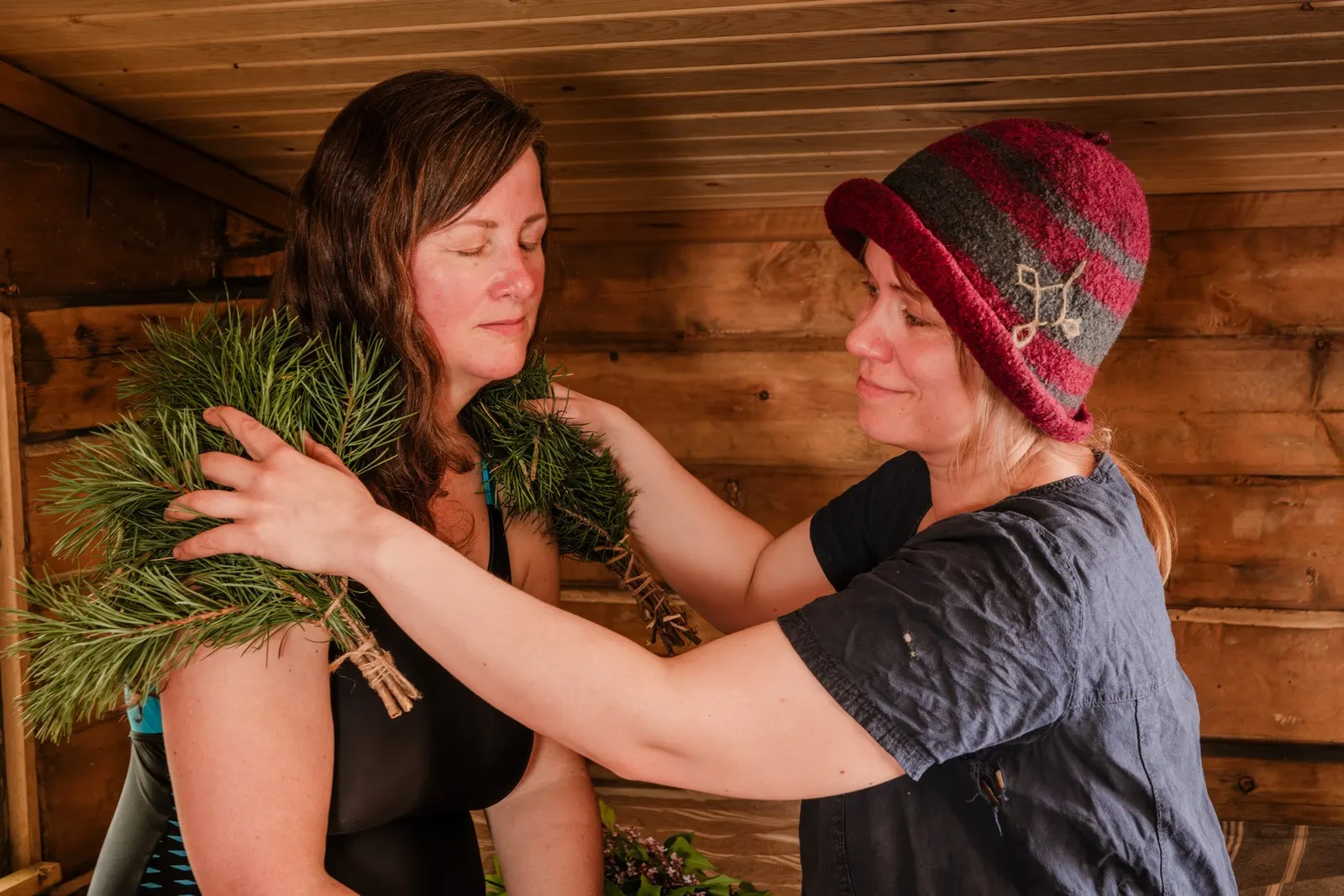
The more poetic names aptly describe this instrument made from tree branches, plants and sometimes herbaceous herbs. They speak of both the practical and the symbolic meaning of the whisk in sauna tradition.
Perhaps the most fitting description of the saunottaja's most important instrument is the soft palm of the forest.
“May the leaf of the whisk refresh, may the leaf of the birch moisten.”
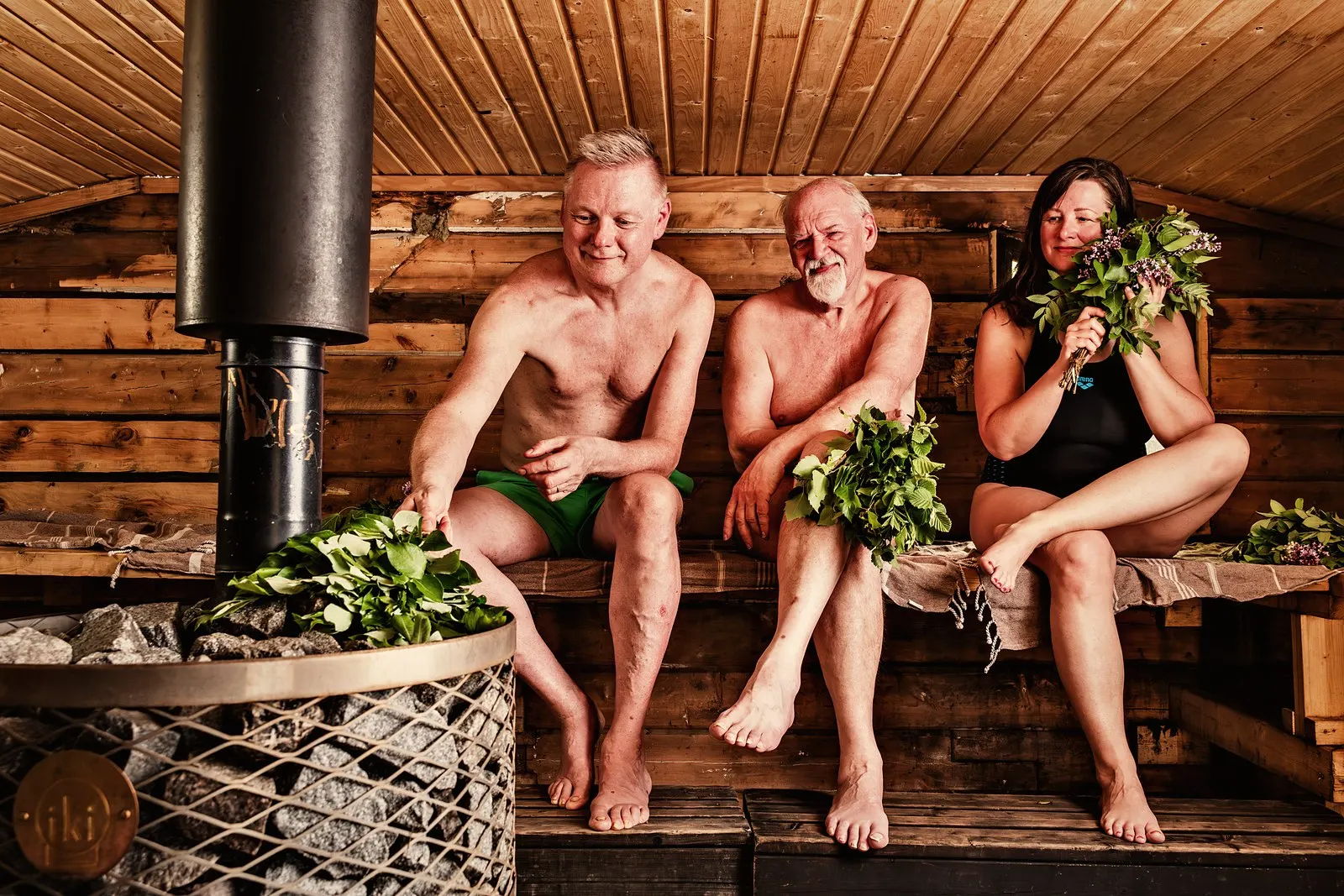
Birch is one of the most important whisk trees. It is versatile, durable, makes you sweat and cleans like natural soap. However, birch has not been the only plant used for making whisks. Sauna tradition knew the properties of different trees and plants, and each had its own purpose. Plants were chosen according to the kind of care, scent or effect that was wanted at the time.
The vocabulary describing the use of the whisk also tells of the richness of the tradition. Finnish has dozens of verbs for using a whisk. With a whisk one can, for example, glide it through the air (liidätellä), flick lightly (ripsutella), steep and steam (haudutella), waft (löyhytellä), sprinkle (vihmoa), whisk (vihtoa), stroke or draw (vedellä) or beat (piestä).
When the special properties of the different plants are added to this, we can speak of a healing and restorative form of craftsmanship, art and experiential knowledge. Generation after generation has observed, tested and passed this knowledge on.